
2026-08-26 · Patrick Lee
Mold Growth Risks After Summer Leaks In Chandler
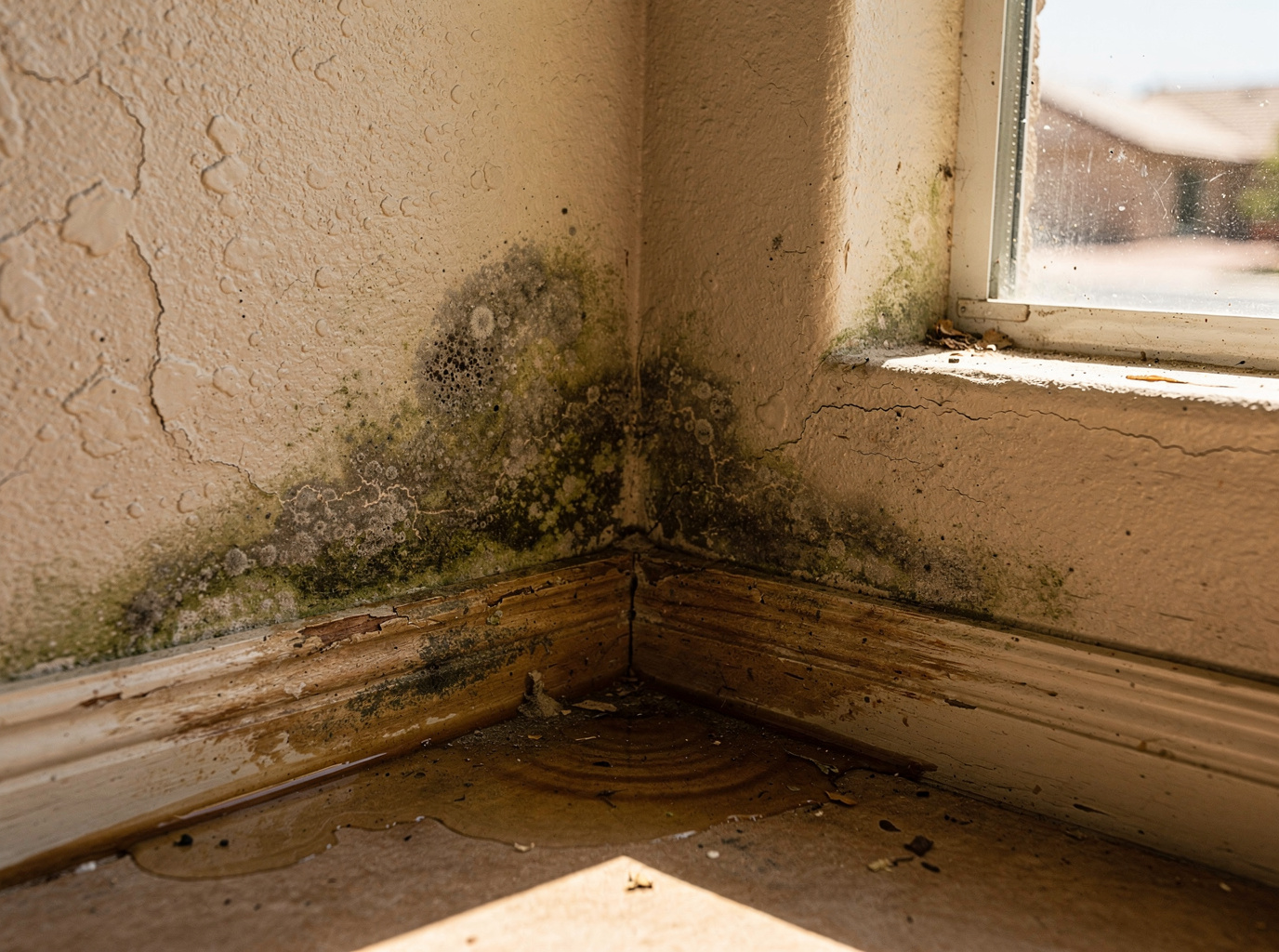
Mold growth after summer leaks in Chandler typically begins within 24-48 hours when indoor humidity exceeds 60 percent, driven by the area's hot desert summers that push temperatures above 105 degrees and trap moisture in slab foundations common to homes built in the 1980s through 2000s.
Summer Climate and Leak Patterns in Chandler
Chandler's hot desert climate with very hot summers and mild winters accelerates moisture issues after leaks because high temperatures speed evaporation while air conditioning systems run constantly, often leading to condensation on pipes and coils. Homes in neighborhoods such as Ocotillo and Sun Lakes feature stucco exteriors and flat roofs that channel monsoon runoff into attics or walls when valleys fail. Nearby Phoenix, Tempe, and Mesa share the same Maricopa County conditions where sudden downpours overwhelm older plumbing in 30-year-old housing stock. These patterns turn small appliance or roof leaks into hidden saturation behind drywall within hours, raising mold risk before homeowners notice musty odors.
Timeline for Mold Development After Leaks
In Chandler's summer heat, porous materials like carpet padding and drywall reach saturation levels that support mold colonies in as little as one day when temperatures stay above 80 degrees indoors. Water from burst pipes or water heater leaks migrates into slab foundations common across Chandler Heights, where soil retains moisture longer due to clay content. Mild winter nights do little to dry these areas because low airflow in sealed homes allows spores to settle. Property owners who delay extraction beyond 48 hours see visible growth on baseboards and subfloors, particularly in single-story ranch homes prevalent in Fulton Ranch and Clemente Ranch.
Hidden Moisture Risks in Local Housing Stock
Many Chandler residences from the 1990s in areas like Downtown Chandler and Pecos Ranch have slab-on-grade construction that traps water from roof leaks or AC condensate lines beneath tile, creating long-term humidity pockets. The desert climate's low nighttime humidity masks daytime moisture until dehumidification is applied, allowing mold to spread into insulation and framing. Structural drying becomes essential because fans alone cannot pull water from concrete in the 110-degree heat that evaporates surface water but leaves subsurface dampness. Readers facing AC-related issues can review How To Spot Hidden Leaks From AC Units In Chandler Homes for early detection steps.
Practical Steps to Reduce Mold After Summer Leaks
Immediate water extraction within the first 12 hours limits mold risk by removing standing water before it soaks into wood framing or drywall. Follow with professional structural drying and dehumidification to bring indoor humidity below 50 percent using commercial equipment sized for 2,000-square-foot homes typical in Warner Ranch. Monitor for black spots on ceilings or warped baseboards, and ventilate only after drying completes to avoid spreading spores. For monsoon-related roof issues, see Water Damage From Roof Valleys During Chandler Monsoons. If growth appears, mold damage remediation after water damage addresses affected materials without disturbing settled spores.
When to Address Slab and Foundation Moisture
Leaks that reach slabs in Chandler Heights or The Islands require targeted drying because Maricopa County's alkaline soils slow natural evaporation and promote microbial growth under flooring. Homeowners should avoid DIY dehumidifiers that cannot handle the volume from a 40-gallon water heater leak. Professional assessment identifies moisture readings above 15 percent in concrete, which signals elevated mold risk within 72 hours. Drying Out Slab Foundations After A Chandler Flood outlines equipment placement for these situations.