
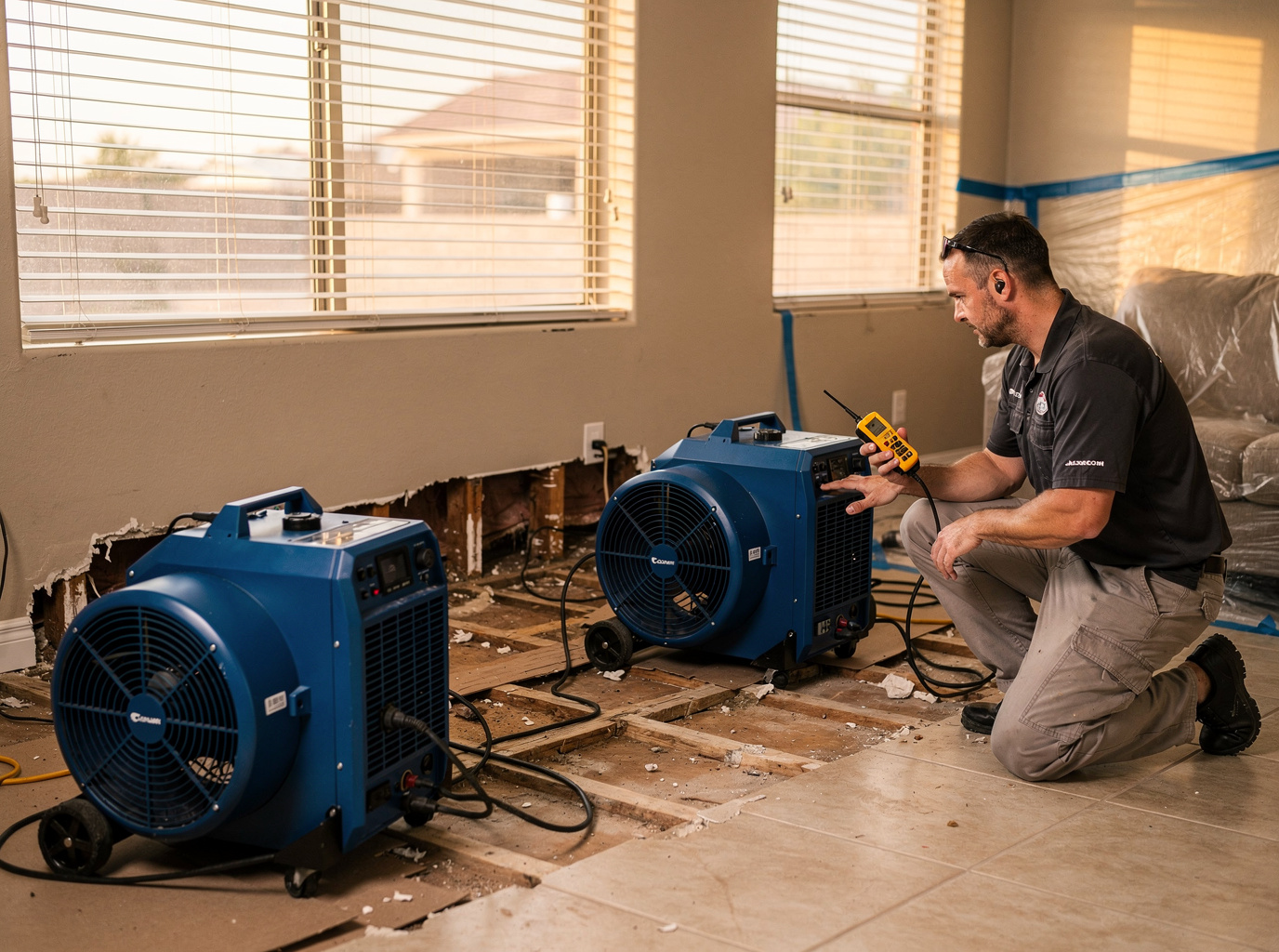
Chandler's hot desert climate drives rapid surface evaporation while moisture lingers inside stucco-clad homes and older drywall assemblies common in Downtown Chandler and Sun Lakes. Technicians use moisture meters and thermal imaging to locate water behind tile, under vinyl plank and within insulation before setting up low-grain refrigerant or desiccant units sized for the square footage and ambient humidity. Without proper extraction, residual moisture in Maricopa County slab-on-grade construction can migrate into adjacent rooms and trigger mold within 48 hours during summer heat.
Edge cases include post-monsoon flooding in Ocotillo where water enters through window wells and travels along foundation footings, and slab leaks near Chandler Fashion Center that saturate underlayment beneath engineered hardwood. Equipment placement must account for tight floor plans in 1990s tract homes and the mild winter temperatures that slow natural drying. Over-drying can crack plaster and separate wood trim, so daily readings guide adjustments rather than fixed run times.
Air movers are positioned to create negative pressure zones that pull moist air through dehumidifiers rather than simply blowing it around, a step that matters in vaulted ceilings found in Chandler Heights properties. Technicians also isolate HVAC returns to prevent spores from circulating into neighboring homes in Tempe and Mesa service corridors. Documentation of moisture levels at each visit satisfies insurance requirements and helps homeowners avoid repeated claims on the same affected areas.
Technician insight
In Chandler the thing that catches most people out with Structural Drying & Dehumidification is how fast our desert heat dries the surface while water stays trapped behind stucco and in slab edges of 1980s homes around Sun Lakes; skipping daily meter checks lets it migrate into drywall before anyone notices.
Ocotillo Home After Summer Storm
Water entered through a window during monsoon rain and wicked into baseboards and underlayment. Meters showed elevated readings three feet up the drywall and under the slab edge. Desiccant units and perimeter air movers ran for four days with daily checks until all materials tested dry, preventing mold growth before repairs began.
Structural Drying & Dehumidification Services We Offer
✓Moisture Mapping and Monitoring
Technicians place pin and pinless meters plus data loggers throughout affected rooms to track drying progress in real time and prevent hidden pockets in stucco and drywall.
✓Desiccant Dehumidifier Deployment
High-capacity desiccant units pull moisture from dense materials like concrete slabs and plaster in Chandler's low-humidity summers where standard refrigerant units lose efficiency.
✓Air Mover and Circulation Setup
Strategic placement of air movers creates directed airflow across wet surfaces and through wall cavities to speed evaporation without spreading dust in older Sun Lakes homes.
✓Slab and Subfloor Drying
Specialized mats and injectors pull water from beneath tile and hardwood in slab-on-grade homes common across Ocotillo and Chandler Heights after leaks or storms.
✓Post-Monsoon Structural Drying
Rapid response drying after monsoon rains that enter through roofs and windows in Downtown Chandler, focusing on attic spaces and exterior wall cavities.
Structural Drying & Dehumidification Cost in Chandler, AZ
| Service | Typical Range | What Affects It |
|---|---|---|
| Single Room Drying | $650–$1,400 | Varies with wall cavity access and days required in summer heat |
| Whole Home Drying | $2,200–$4,800 | Larger footprint homes in Ocotillo or Sun Lakes need more units and longer runs |
| Slab Subfloor Drying | $900–$2,100 | Extra time for concrete moisture release after leaks |
| Equipment Rental Extension | $150–$350 per day | Added when readings stay elevated beyond initial plan |
Ranges are typical for Chandler, AZ and confirmed with an exact written quote before any work starts.
How it works
- 1
Initial Assessment
Technicians arrive from the Alma School Road location and document moisture levels room by room using meters and imaging before any equipment starts.
- 2
Water Extraction
Standing water is removed first with portable extractors to reduce the load on drying equipment in hot Chandler summers.
- 3
Equipment Placement
Dehumidifiers, air movers and containment barriers are positioned based on home layout and material types found in the specific neighborhood.
- 4
Daily Monitoring
Readings are taken each visit and equipment is adjusted until all materials reach acceptable moisture content for the local climate.
- 5
Final Verification
Final meter readings and photos confirm the structure is dry before equipment removal and handoff to any needed repairs.
Pricing
Pricing depends on square footage affected, equipment runtime and home construction type; quotes are provided after the initial assessment.