
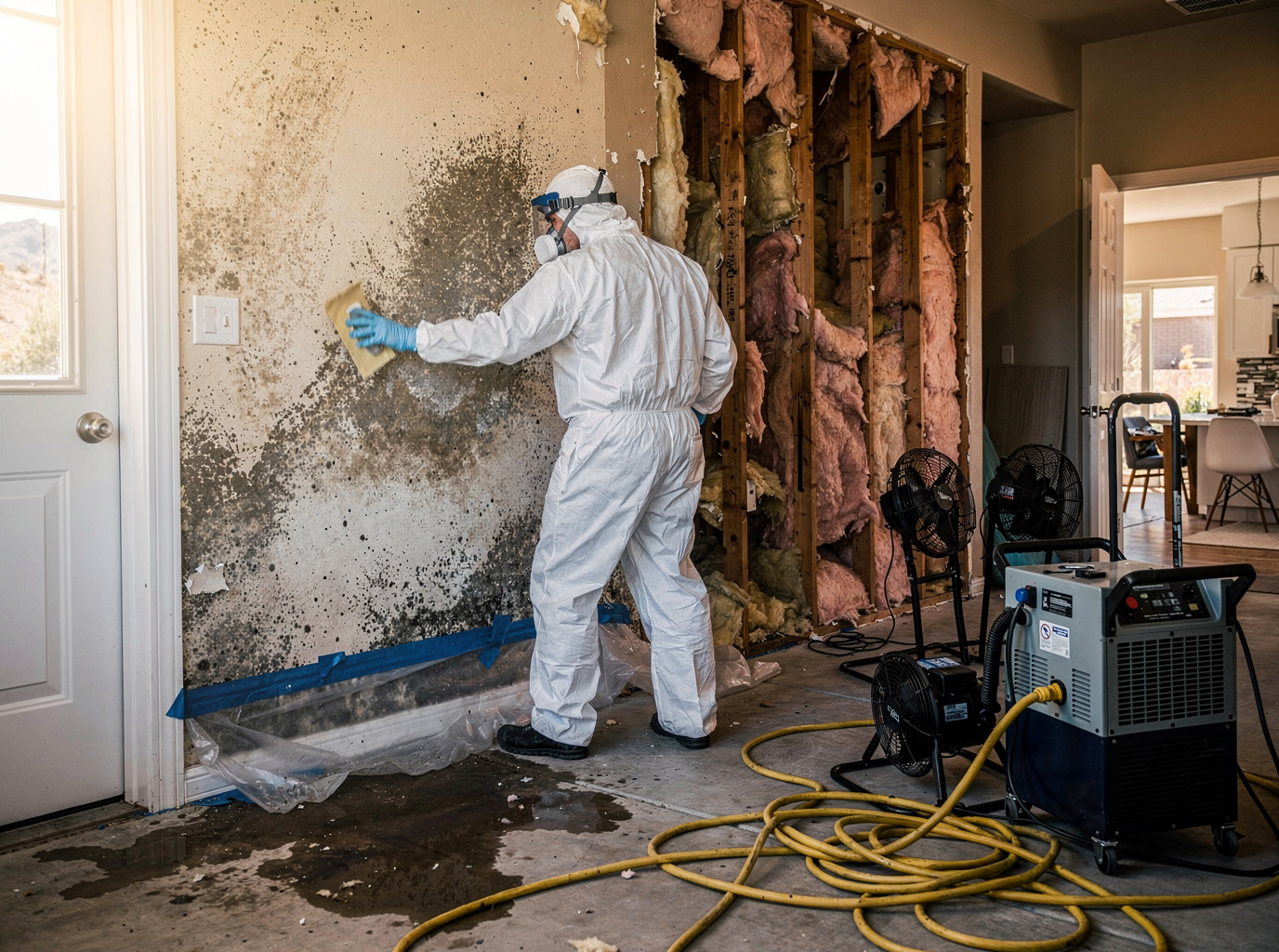
In Chandler's hot desert climate, water from monsoons or plumbing failures often soaks into stucco homes and older drywall common in Downtown Chandler and Chandler Heights. Mold can take hold behind cabinets or under flooring within 48 hours when moisture lingers in the mild winters. Remediation requires removing affected porous materials like carpet pad and insulation while using containment to keep spores from spreading into living spaces during the dry, windy summer months.
Maricopa County homes near Veterans Oasis Park and Chandler Fashion Center frequently have slab foundations that trap moisture after leaks, leading to hidden growth in subfloors. Technicians must test humidity levels in wall cavities and use negative air machines because the region's low rainfall can mask ongoing dampness until odors appear. Edge cases include mold in HVAC systems of Tempe-adjacent properties where shared walls allow cross-contamination.
Proper remediation follows IICRC standards for material disposal and air scrubbing, especially in Sun Lakes retirement communities where residents have respiratory sensitivities. Skipping source drying before treatment often causes recurrence when summer heat pulls residual moisture to the surface. Local crews inspect for hidden pockets in attics and under sinks common to 1980s-2000s builds throughout the area.
Work in neighborhoods like Ocotillo demands extra attention to tile grout lines and baseboards where water wicks upward from irrigation runoff. Documentation of moisture readings before and after ensures the job meets insurance requirements for nearby Phoenix and Mesa properties.
Technician insight
In Chandler, the thing that catches most people out with Mold Damage Remediation After Water Damage is how the dry desert air lets moisture hide inside stucco walls and under tile for weeks after a leak, especially in 1990s Ocotillo builds with poor grading near irrigation ditches. Homeowners often repaint too soon and the smell returns when summer heat pulls it back out.
Ocotillo Home After Irrigation Leak
A slab leak under tile in an Ocotillo kitchen went unnoticed for ten days. Inspection found mold growth in the subfloor and up two feet into drywall. Crews removed the affected sections, dried the slab, and treated the joists. The home passed clearance testing with no recurrence after the homeowners adjusted sprinklers.
Mold Damage Remediation After Water Damage Services We Offer
✓Hidden Mold Inspection After Leaks
Thermal imaging and moisture meter checks locate growth behind walls in Chandler Heights homes before visible signs appear.
✓Drywall and Insulation Removal
Safe cutting and disposal of contaminated drywall and fiberglass in Ocotillo properties to stop spore spread.
✓HVAC System Mold Cleaning
Ductwork and coil treatment for properties near Chandler Center for the Arts where shared systems move spores between units.
✓Subfloor Drying and Treatment
Targeted drying under tile and hardwood in Sun Lakes homes affected by slab leaks common in Maricopa County builds.
✓Attic Mold Remediation
Ventilation and removal work in Downtown Chandler older homes where roof leaks during rare rains create hidden pockets.
Mold Damage Remediation After Water Damage Cost in Chandler, AZ
| Service | Typical Range | What Affects It |
|---|---|---|
| Small bathroom remediation | $1,200–$2,400 | Depends on drywall square footage and whether subfloor treatment is needed. |
| Kitchen or laundry room job | $2,000–$3,800 | Higher when cabinet removal and HVAC cleaning are required. |
| Whole-room or attic work | $3,500–$6,500 | Varies with access difficulty in older Downtown Chandler homes. |
| HVAC duct cleaning add-on | $600–$1,100 | Common in multi-unit buildings near Chandler Fashion Center. |
Ranges are typical for Chandler, AZ and confirmed with an exact written quote before any work starts.
How it works
- 1
Initial Assessment
Technicians arrive from the Alma School Road location and document moisture sources plus affected materials in the specific Chandler neighborhood.
- 2
Containment Setup
Plastic barriers and negative air pressure isolate the work zone to prevent spores from reaching unaffected rooms.
- 3
Material Removal
Porous items like drywall, carpet, and insulation are cut out and bagged for proper disposal.
- 4
Drying and Treatment
Air movers, dehumidifiers, and antimicrobial applications address remaining moisture in slabs or cavities.
- 5
Final Clearance
Post-remediation humidity checks and visual inspection confirm the space is dry before reconstruction begins.
Pricing
Pricing based on square footage inspected and materials removed, with written estimates provided same day.