
2026-08-26 · Patrick Lee
Water Damage From Roof Valleys During Chandler Monsoons
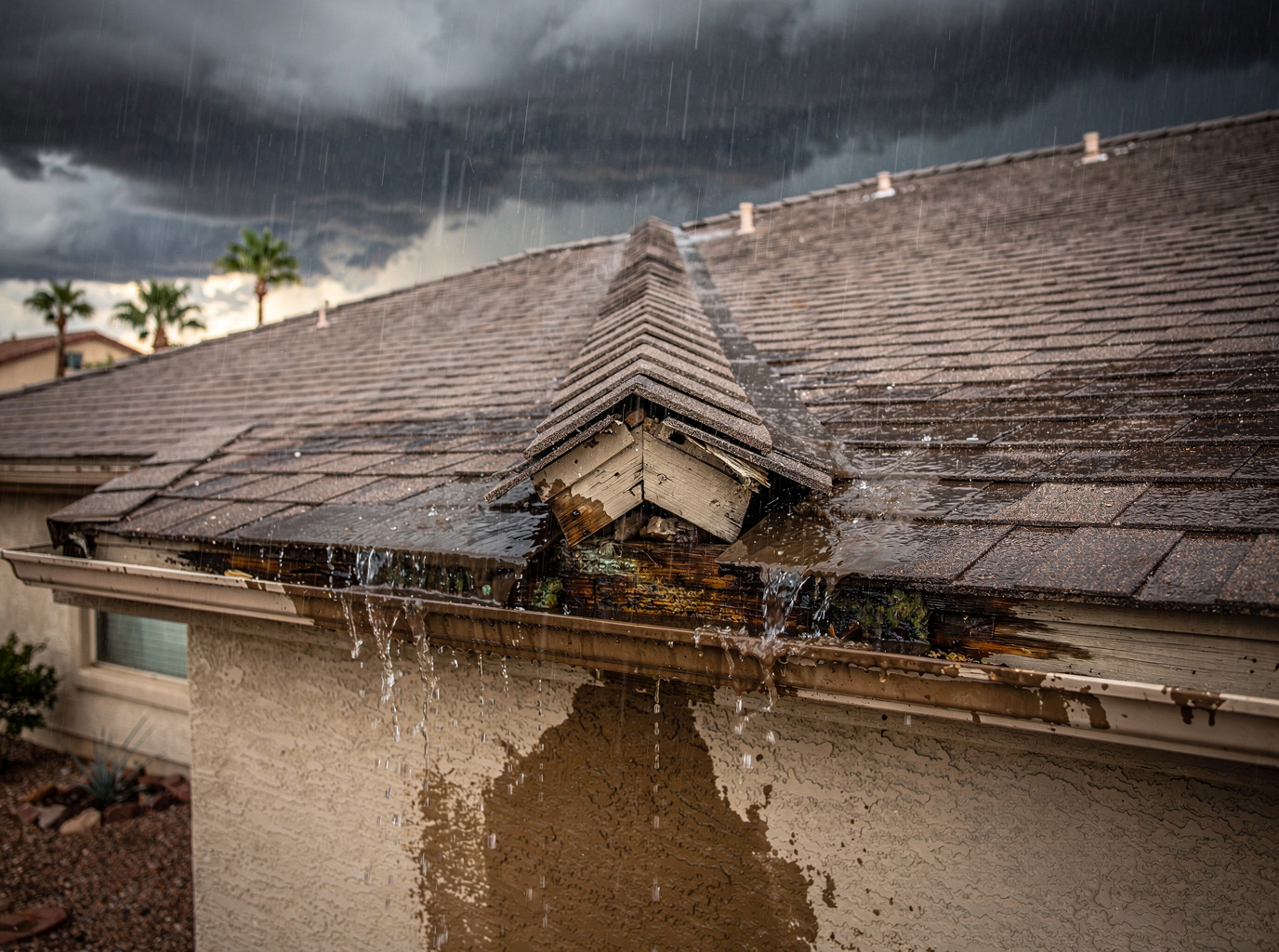
Roof valleys in Chandler homes channel monsoon runoff at high volume and often fail within the first few heavy storms of the season when flashing or underlayment degrades. In Maricopa County the combination of 100-plus-degree summer heat followed by sudden downpours cracks sealants and lifts shingles along these intersections faster than on open roof planes.
Why Roof Valleys Fail During Monsoon Season
Chandler's hot desert climate bakes roofing materials for months before monsoons arrive, leaving asphalt shingles brittle and metal flashing expanded. When 1–2 inches of rain falls in under an hour, water finds every gap at the valley where two roof slopes meet. Homes in Ocotillo and Chandler Heights built before 2000 commonly have single-layer underlayment that no longer meets current wind-driven rain standards. Nearby Phoenix and Tempe see the same pattern because the entire East Valley shares identical monsoon exposure and aging housing stock. Proper valley construction uses 24-inch-wide metal flashing with ice-and-water shield beneath, yet many original installations used only felt paper that has since dried out.
Visible and Hidden Signs in Local Homes
Water stains often appear first on ceilings directly below the valley line in living rooms or upstairs hallways. In Downtown Chandler bungalows, moisture can travel along rafters and show up weeks later in exterior walls near the garage. Homeowners in Sun Lakes report musty odors in closets or laundry rooms after storms because water pools above vaulted ceilings. Checking attics with a flashlight after each monsoon event reveals dark streaks along the valley boards or soft insulation that has absorbed runoff. These indicators differ from AC leaks or plumbing issues because the damage tracks the roof geometry rather than interior pipes.
Impact of Local Terrain and Housing Stock
Flat lots common in Chandler Heights allow water to sit against foundation edges when valley overflow reaches the eaves, increasing slab-edge moisture risk. Older ranch homes in The Islands neighborhood often have low-slope valleys that collect debris from nearby mesquite trees, slowing drainage during storms. Maricopa County's alkaline soil does not absorb excess water quickly, so any roof breach can push moisture into stucco walls that lack modern weep holes. Residents near Veterans Oasis Park notice faster deterioration because afternoon winds during monsoons drive rain sideways into valley seams. These conditions require drying equipment that accounts for both the roof breach and the subsequent wall cavities rather than surface drying alone.
For homes experiencing repeated valley leaks, roof leak water damage restoration addresses both the roof interface and interior moisture. Homeowners can also review average cost of water damage restoration in Chandler Arizona to understand typical project scopes after monsoon events.
Practical Steps After a Valley Leak
Shut off power to affected rooms and document the water line with photos before extraction begins. Remove saturated insulation and carpet padding within 24–48 hours to limit microbial growth in the desert humidity that lingers after storms. Place dehumidifiers set to 45–50 percent relative humidity and monitor moisture meters in subflooring and wall cavities. For properties in Fulton Ranch or Cooper Commons with tile roofs, inspect the valley metal for lifted edges before re-roofing decisions. Professional structural drying prevents hidden mold behind drywall that later requires remediation.
If monsoon damage extends beyond the attic, storm water damage restoration teams coordinate roof repairs with interior drying protocols suited to Chandler's climate. Readers concerned about older construction can also consult checking for water damage in Chandler homes built before 2000 for additional inspection guidance.