
2026-08-26 · Patrick Lee
Monsoon Season Water Damage Prevention In Chandler
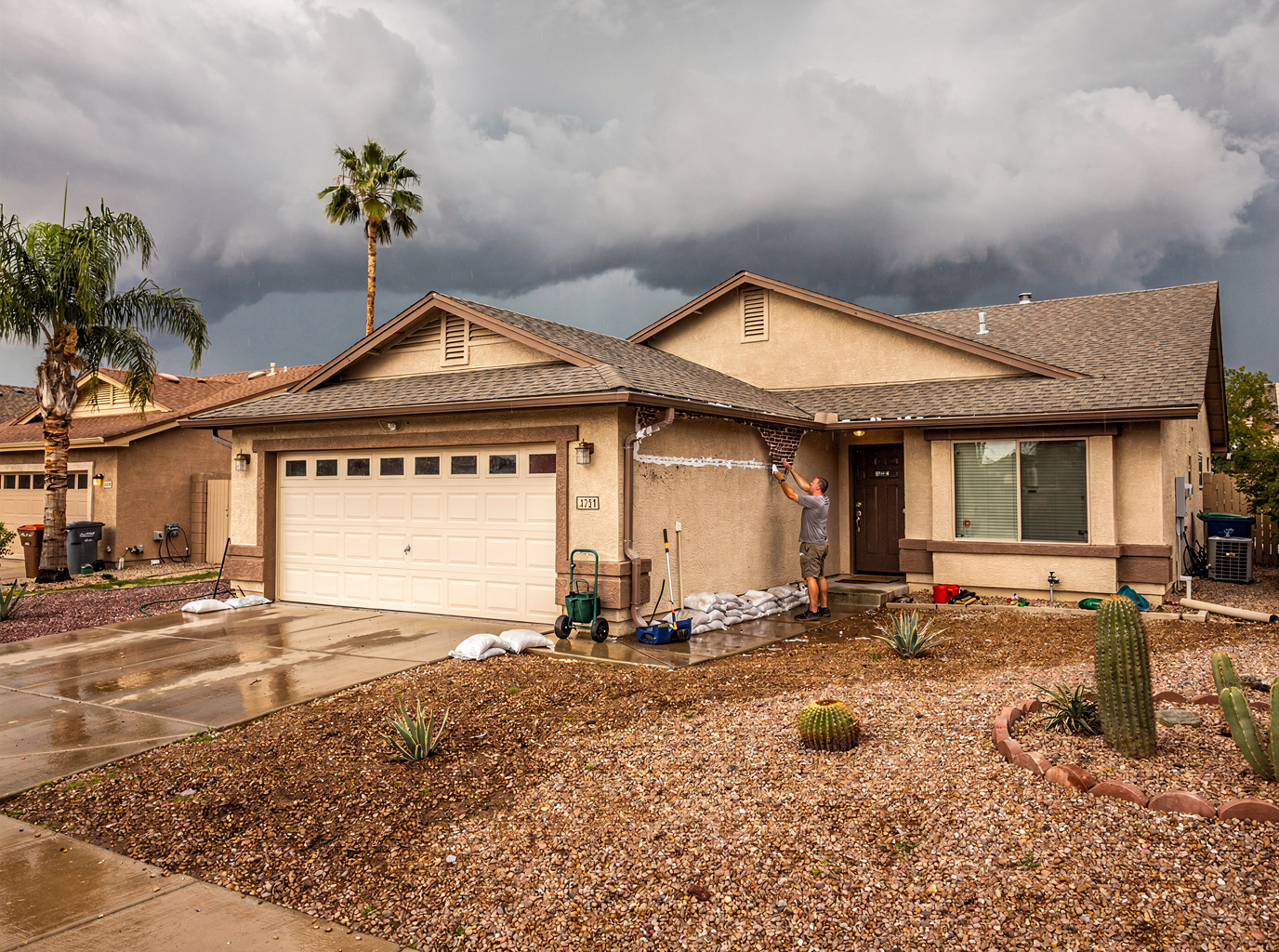
Chandler homeowners can reduce monsoon water damage risks by inspecting roofs for valley leaks, clearing drainage paths, and sealing entry points before July storms arrive. These steps address the hot desert climate's pattern of intense afternoon downpours after dry spells that leave soil hard and prone to runoff.
Checking Roofs and Valleys Before Storms Hit
Monsoon rains often concentrate at roof valleys where two slopes meet, especially on homes built in the 1990s and 2000s across Ocotillo and Chandler Heights. Walk the roof edges in early June to look for cracked flashing, loose shingles, or debris buildup that channels water under the underlayment. In Downtown Chandler, older tile roofs on single-story ranch homes require extra attention at the intersections with chimneys and skylights. Clearing these spots early prevents interior leaks that can reach drywall within hours of a 1-inch-per-hour rainfall. Homeowners near Veterans Oasis Park should also trim overhanging palo verde branches that drop pods onto valleys during wind gusts. For detailed valley-specific guidance, review the article on water damage from roof valleys during Chandler monsoons. Professional roof leak water damage restoration teams note that proactive flashing repairs cut emergency calls by addressing the exact failure points common after 20–30 mph monsoon winds.
Improving Drainage Around Desert Lots
Chandler's clay-heavy soils in Sun Lakes and Fulton Ranch neighborhoods turn impermeable after the first monsoon rain, sending water toward foundations instead of soaking in. Grade soil 6 inches over 10 feet away from the house on all sides, and add French drains or gravel swales along the south and east walls where afternoon storms approach. Clear debris from street gutters near Chandler Fashion Center access roads so water flows into storm sewers rather than pooling at driveways. In Chandler Heights, homes with irrigation timers should reduce run times to 10 minutes per zone during July and August to avoid saturating already wet ground. These adjustments keep crawl spaces and slab edges dry even when Maricopa County receives 2–4 inches in a single evening. Properties in low spots near The Islands benefit from battery backup sump pumps rated for 3,000 gallons per hour.
Sealing Entry Points and Monitoring Plumbing
Wind-driven rain during monsoons forces water through window and door frames on homes facing prevailing southwest winds in Ocotillo. Apply fresh exterior caulk around frames and check weatherstripping on garage doors before July. Inside, shut off irrigation valves at the main box during storm watches to prevent broken lines from adding to surface water. Older plumbing in Warner Ranch and Cooper Commons can develop pinhole leaks when temperature swings stress copper lines; install water shutoff valves at each fixture for quick isolation. After heavy rain, check under sinks and water heaters for moisture within 24 hours. These habits limit the volume of water that reaches subfloors or cabinet bases.
Preparing for Runoff in Chandler Neighborhoods
Sudden flooding along the Consolidated Canal corridor affects parts of Downtown Chandler and nearby Tempe border areas when monsoon flow exceeds storm drain capacity. Keep area drains and downspout extensions clear of leaves and gravel. Store sandbags at the 590 N Alma School Rd shop location for quick deployment around low window wells. Residents in Pecos Ranch should monitor backyard slopes for erosion that can undermine patios. After the season, schedule structural drying & dehumidification if any moisture lingers in wall cavities. Consistent prevention focused on these local conditions keeps most Chandler properties dry through the July–September window.