
2026-08-26 · Patrick Lee
Protecting Irrigation Lines From Breaking During Chandler Heat
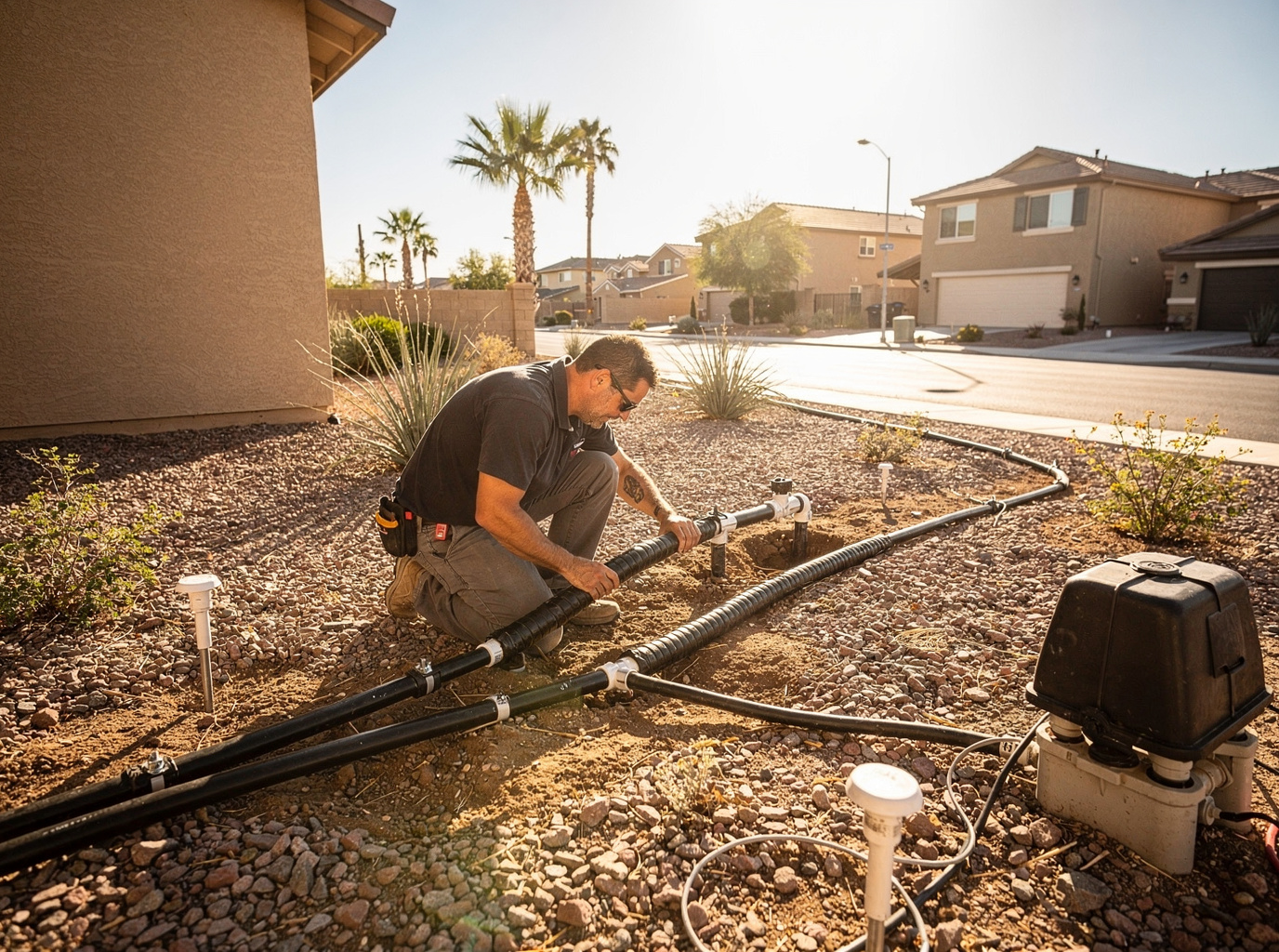
In Chandler's hot desert climate, irrigation lines typically last 8–12 years before heat-related stress causes breaks, but burying them at 12–18 inches and flushing systems twice yearly can push that to 15–20 years in neighborhoods like Ocotillo and Chandler Heights.
Chandler Heat Effects on PVC Irrigation Lines
Chandler summers regularly exceed 110°F, causing PVC pipes to expand during the day and contract at night. This cycle stresses joints in the sandy, alkaline soils common across Maricopa County. Homes built before 2000 in Downtown Chandler often have thinner-wall Schedule 20 pipe that fails faster than modern Schedule 40. The same temperature swings that warp lines also dry surface soil, increasing friction and creating point loads where pipes cross driveways or sidewalks. Nearby Tempe and Mesa see identical patterns because they share the same desert floor. When a line cracks near a slab, water migrates under the foundation within hours, exactly the scenario addressed in Drying Out Slab Foundations After A Chandler Flood.
Soil Movement and Pressure Changes in Local Yards
Maricopa County soil shrinks and swells with irrigation cycles, shifting lines 1–2 inches per season in Ocotillo and Sun Lakes. High water pressure from municipal supplies compounds the problem when valves stick open during peak heat. Homeowners can measure static pressure at the backflow preventer; readings above 80 psi warrant a pressure-reducing valve. Checking for soft spots along the line after 10pm, when evapotranspiration drops, reveals early leaks before they reach the Chandler Fashion Center area or Veterans Oasis Park trails. These small movements rarely affect newer subdivisions but remain common on older lots near Chandler Center for the Arts.
Practical Steps to Protect Lines This Summer
- Locate the main shutoff and test it monthly so you can isolate a break quickly.
- Flush each zone for three minutes at the start and end of summer to clear sediment that accelerates wear.
- Add 2 inches of mulch over exposed pipe runs to reduce surface temperature swings.
- Replace any exposed black poly tubing with UV-rated PVC where lines surface near pool decks or patios.
These steps apply directly to properties in Chandler Heights where irrigation runs parallel to older sewer laterals.
When Breaks Occur and Next Steps
A sudden drop in zone pressure or soggy patches near the street usually signals a split fitting. Shut off the system and note the exact location before calling for extraction. If water reaches a slab or enters the home, the Burst Pipe & Plumbing Leak Cleanup service at /services/burst-pipe-plumbing-leak-cleanup outlines the drying sequence used in Chandler. For yards that already flooded after a line failure, the guide at /blog/drying-out-slab-foundations-after-a-chandler-flood explains moisture mapping under concrete. Acting within 24 hours limits mold risk in the mild winter months that follow Chandler's intense summers.
Scheduling Routine Checks Around Local Weather
Perform a full walk-through every March before temperatures climb and again in October when monsoons end. Note any valves near the 590 N Alma School Rd corridor that show mineral buildup, a common issue in Chandler's hard water. Document photos of each zone head so changes are obvious year to year. This simple record helps owners in Fulton Ranch and Cooper Commons track line performance without guesswork.