
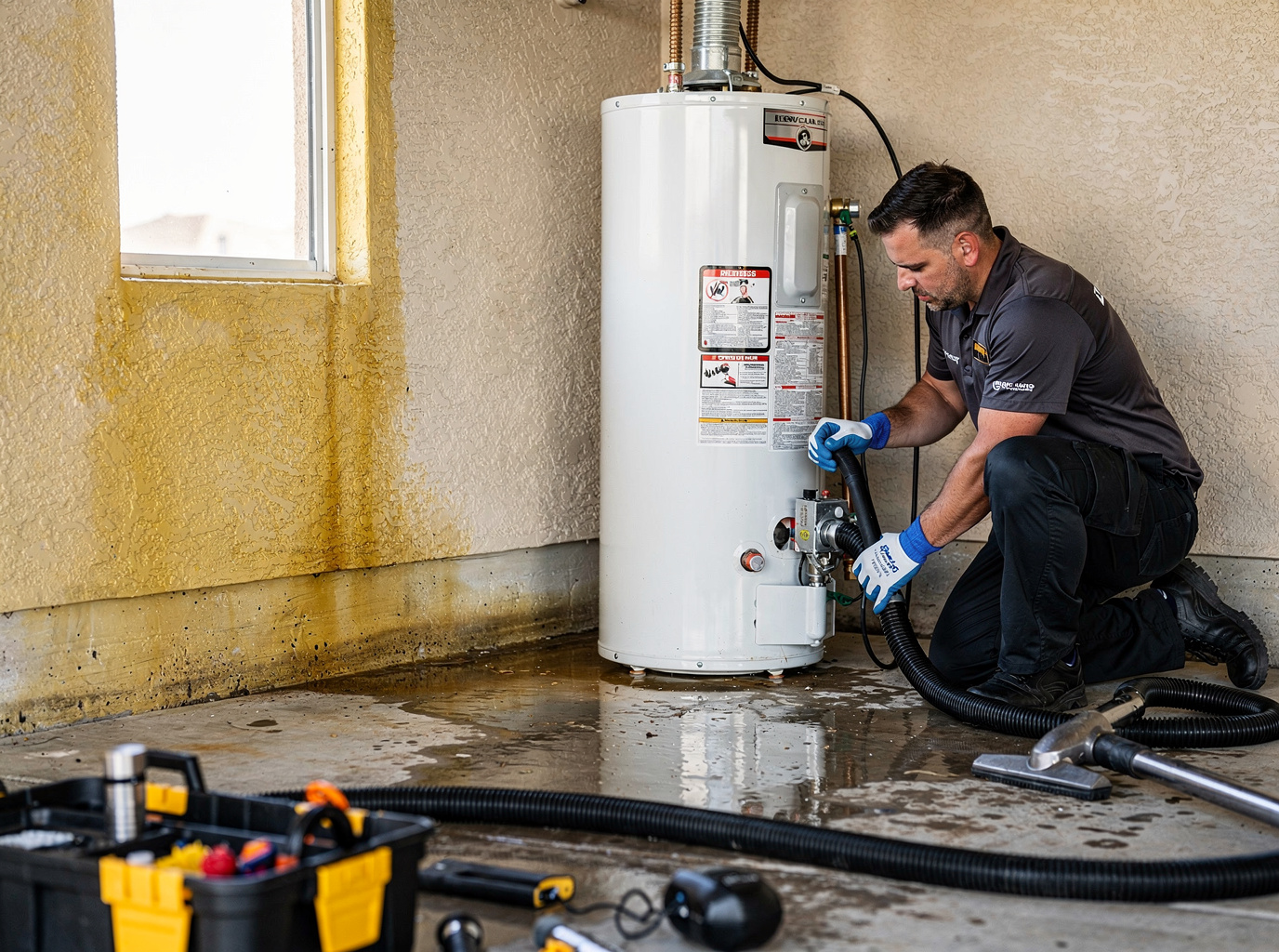
Water heater leaks in Chandler often stem from mineral scale buildup common with Maricopa County groundwater, especially in homes built before 2000 around Sun Lakes and Chandler Heights. Slab foundations prevalent here allow water to migrate under tile or carpet before surfacing, requiring moisture meters and thermal imaging to map hidden saturation. Technicians must account for rapid evaporation in 110-degree summers that can mask ongoing seepage while accelerating mold risk once temperatures moderate.
Garages and utility closets in Ocotillo and Downtown Chandler properties frequently house both gas and electric units, creating different cleanup demands. Gas models require shutoff verification and ventilation checks before extraction begins, while electric units involve panel isolation to avoid shorts during drying. Nearby Phoenix and Tempe jobs show similar patterns, but Chandler's mix of single-story ranch homes and newer two-story builds changes how water travels through walls and underfloor spaces.
Drying protocols adjust for the area's low humidity once extraction finishes, using fewer air movers than coastal regions but longer run times to pull residual moisture from stucco-adjacent framing. Homeowners in Veterans Oasis Park neighborhoods often overlook pan overflows until drywall softens, so crews inspect adjacent rooms even when the leak appears contained to the heater footprint.
Technician insight
In Chandler, the thing that catches most people out with Water Heater Leak Cleanup is hard water scale from the local supply that eats through older tanks faster in Sun Lakes and Chandler Heights homes, letting small leaks spread under slabs before anyone notices.
Ocotillo Garage Leak
A tank seam failed overnight in an Ocotillo ranch home, sending water across the garage slab toward the laundry room. Crews extracted visible water, then used meters to find saturation under the utility closet wall. Targeted drying prevented drywall damage and allowed the homeowner to schedule replacement without secondary mold issues.
Water Heater Leak Cleanup Services We Offer
✓Tank Leak Extraction
Remove standing water from ruptured tanks and surrounding floors before mineral-laden moisture reaches slab edges in Chandler Heights homes.
✓Slab Leak Containment
Locate and extract water migrating under tile from failed water heater connections common in pre-1990 Ocotillo construction.
✓Garage Water Heater Cleanup
Contain and dry leaks from units placed near vehicles and stored items, preventing corrosion spread in Sun Lakes garages.
✓Overflow Pan Remediation
Clear clogged drain lines and dry saturated subfloors when pans fail during peak summer demand in Downtown Chandler.
✓Attic Heater Leak Drying
Extract water from ceiling cavities after attic-mounted units leak, protecting insulation in two-story Chandler properties.
Water Heater Leak Cleanup Cost in Chandler, AZ
| Service | Typical Range | What Affects It |
|---|---|---|
| Initial Assessment and Moisture Mapping | $125–$225 | Includes meter readings in garage and adjacent rooms |
| Water Extraction | $300–$650 | Varies with volume and slab edge access in single-story homes |
| Drying Equipment (per day) | $150–$350 | Dehumidifiers and air movers; typical 3–5 day runs in dry climate |
| Wall or Ceiling Cavity Drying | $400–$900 | Added when leaks reach insulation in two-story Ocotillo homes |
Ranges are typical for Chandler, AZ and confirmed with an exact written quote before any work starts.
How it works
- 1
On-Site Assessment
Technician inspects the water heater, maps moisture with meters, and checks adjacent rooms in the specific Chandler neighborhood.
- 2
Water Extraction
Remove free water from floors and cavities using portable pumps suited to slab-on-grade construction.
- 3
Drying and Monitoring
Place dehumidifiers and air movers, then track moisture levels daily until readings match unaffected materials.
- 4
Final Clearance
Verify dryness, document conditions, and advise on heater replacement timing before returning the space to use.
Pricing
Costs depend on leak volume, affected square footage, and whether slab or wall cavities require extended drying.